The Care Guide: How to Make Cotton Last (and Get Softer) for Years
 Marcus LeeCustomer Care·July 15, 2026·10 min read
Good cotton is a strange purchase: treated right, it's one of the only things you own that improves with use. Treated wrong, a beautiful set of sheets can be wrecked in a season, and the washing machine, not the bed, does the wrecking. This is the complete care manual for everything we make: the science of why cotton behaves the way it does in the laundry, the five mistakes that destroy most bedding, and the routines that had customers writing to us about eight-year-old sheets that "still feel new, only softer."
Why good cotton gets softer (and cheap fabric gets worse)
Understanding one mechanism makes every care rule below obvious. Cotton yarn leaves the mill under tension: spun, woven and finished with every fibre pulled taut. Washing relaxes that tension: water swells the fibres, agitation flexes them, and with each cycle the yarn settles into a softer, more open shape. That's the entire magic of "gets softer every wash": it's mechanical relaxation, and it's permanent.
The catch: two other processes run in the laundry at the same time. Abrasion breaks fibres: harmless for long-staple yarn with few fibre ends, but devastating for short-staple fabric, which sheds and pills. And chemical attack, chlorine, high heat, harsh detergent, weakens the cellulose itself. Care is simply the art of letting relaxation happen while starving the other two. (Why long fibres win this game is the whole story of Cotton, Decoded.)
Laundry is the second half of manufacturing. The mill makes the fabric; your washing machine decides what it becomes.Priya Anand, LANE LINEN Quality
The first wash: non-negotiable
Wash everything before first use: sheets, towels, blankets, all of it. Three reasons: the first wash rinses away loose lint left from cutting and sewing; it relaxes the weave into its true hand (fabric off the shelf never feels like fabric after wash three); and it lets shrinkage happen on schedule: our fabrics are cut oversized precisely so that first-wash settling lands them on their labelled dimensions.
Do it simply: cool or warm water, half-dose of mild detergent, wash dark colours separately, tumble low. Towels benefit from a first wash with a cup of white vinegar in the rinse: it strips any residual finishing and kick-starts absorbency.
The five laundry mistakes that kill bedding
- Fabric softener on towels. The number-one towel killer. Softener works by coating fibres with a waxy film, on a towel, that film waterproofs the exact loops that are supposed to drink water. The towel feels slick, smells perfumed, and absorbs like a raincoat. Our zero-twist towels are engineered soft; coating them is like painting a window.
- Too much detergent. Doses on the bottle assume heavily soiled loads. Bedding is lightly soiled; excess detergent doesn't rinse fully, builds up in the fibre, stiffens the hand and traps odour. Half-dose is almost always right.
- Hot everything. Heat is the main shrinkage and fibre-stress lever. Warm wash (up to 40°C/104°F), low-heat dry handles everything short of a sickroom. Save hot washes for genuine sanitizing moments.
- Chlorine bleach on "dingy" whites. Chlorine attacks cellulose: repeated bleaching literally dissolves strength, and it yellows optical brighteners over time, creating the dinginess it promised to fix. Oxygen bleach (percarbonate) brightens without the damage.
- Overstuffed machines. Cleaning is mechanical: fabric must move through water. A drum packed tight abrades fabric against fabric while washing nothing properly. Two-thirds full, maximum.
Sheets: the weekly rhythm
Sheets want washing weekly: skin oils are mildly acidic and slowly degrade cotton where your body rests. Hence neglected sheets wear through at the centre first. The routine that keeps them improving instead:
- Warm, gentle or normal cycle, mild detergent. Percale and sateen both thrive on it.
- Dry low, pull slightly damp. Over-drying is where wrinkles set and fibres get brittle. Five minutes before "bone dry," pull them and spread them on the bed: body-heat finishes the job smoother than any iron.
- Skin products note: benzoyl-peroxide acne treatments bleach fabric on contact: irreversibly. If anyone in the house uses them, white pillowcases are the strategy: peroxide can't stain white, and spare pairs keep the rotation painless.
- Rotate two sets. Each set washes half as often and rests between duties. Two sets bought once outlast three sets bought serially.
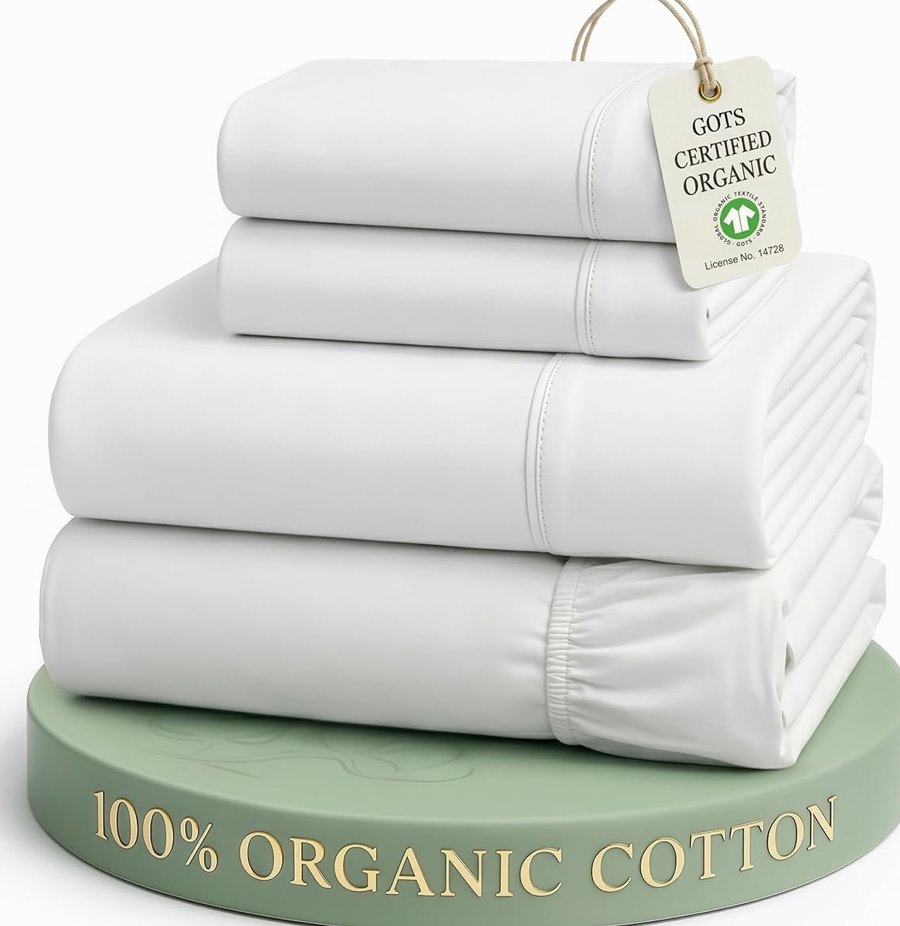
Queen Organic Cotton Percale Sheet Set, 4-Piece, Cooling White
Percale rewards lazy laundering: wash warm, dry low, shake out: the relaxed crisp look is the look.
View details & specs →Towels: the absorbency preservation program
A towel's job is held in its loops, and everything in towel care protects loop structure. Wash every three to four uses (they're collecting your skin's flora between showers), warm water, half-dose detergent, never softener. Shake each towel out as it goes into the dryer, it opens the loops, and dry on low until just dry.
Two rescue recipes worth memorizing:
- Musty towel reset: one hot wash with a cup of white vinegar, no detergent; then a second hot wash with half a cup of baking soda. Strips residue and odour back to zero. Works on any cotton towel, ours or not.
- Crunchy towel fix: that's detergent buildup, not "wearing out." Two hot rinses with no product at all, then return to half-dosing. The softness comes back because it never left: it was buried.
Beach towels add one rule: rinse the salt or chlorine out the same day: both stiffen and fade fabric if they dry in. The flat weave of Turkish towels line-dries in a couple of hours, which is the whole point of them; details in the product specs of the beach collection.
Blankets, kitchen towels and the hard-working rest
Blankets want gentle treatment and infrequent washing: monthly, or seasonally if they layer over a flat sheet. Gentle cycle, cold or cool water, low tumble; the herringbone weave is snag-resistant, but wash it separately from anything with zippers or velcro anyway. Store clean and bone-dry in a breathable cotton bag or open shelf, never in sealed plastic: cotton needs to breathe or it mildews.
Kitchen towels are the opposite: they live hard and like it hot. Grease and food soil justify a full detergent dose and genuinely hot water: this is the one category where hot washing is correct. Replace the sour-smell habit of leaving them damp and balled up: hang them open on the rail (the 20-piece set has hanging loops on every piece for exactly this reason). Oven mitts wash like the towels; skip softener so their quilting stays heat-protective. A twelve-pack means a fresh towel daily with one weekly wash load.
| Item | Wash frequency | Water | Detergent | Dry |
|---|---|---|---|---|
| Sheets & pillowcases | Weekly | Warm | Half dose, mild | Low, pull damp |
| Bath towels & washcloths | Every 3–4 uses | Warm | Half dose, no softener | Low, shake first |
| Beach towels | After each beach day | Warm (rinse salt same day) | Half dose | Line or low |
| Blankets | Monthly / seasonally | Cool, gentle | Half dose, mild | Low tumble |
| Kitchen towels & mitts | 2–3× weekly | Hot | Full dose | Normal |
Stain first-aid: the household incidents, ranked
Real bedding meets real life: coffee in bed, a nosebleed, a toddler with a marker. Cotton is far more forgiving than synthetics here (fibres that absorb water also release what water carries), but speed and the right first move decide everything. The universal rules: act while it's wet, blot rather than rub, use cold water first, and never tumble-dry anything still stained: dryer heat cures a stain like a kiln.
| Stain | First move | Then | Never |
|---|---|---|---|
| Coffee & tea | Cold-water flush from the back | Dab of liquid detergent, 5 min, warm wash | Bar soap on tannins: it sets them |
| Blood | Cold water immediately, keep flushing | Oxygen bleach paste if traces remain | Hot water, it cooks the protein in |
| Red wine | Blot hard, cover in salt to draw | Cold flush, oxygen bleach soak | Rubbing it wider |
| Body oils / sunscreen | Full-strength dish soap on the spot | 15 min, then the hottest wash the label allows | Ignoring it, oils yellow over months |
| Makeup & foundation | Scrape excess, dish soap dab | Cold wash; repeat before any drying | Hot water first, waxes melt in |
| Ink & marker | Rubbing alcohol on a cloth behind the stain | Blot through onto the cloth, then wash | Water first, it spreads dye-based inks |
The pattern worth memorizing: protein cold, oil hot, tannin flushed, ink dissolved. And for whites, oxygen bleach soaks overnight are the safe heavy artillery: they rescue what looks unrescuable without the fibre damage chlorine causes. If a pillowcase does lose the fight, that's what a spare pair is for: retire the casualty to the rag drawer with honour.
Ironing, or the case for mostly not
Nobody has to iron bedding, and most of our customers never do, pulling percale from the dryer slightly damp and spreading it on the bed produces the relaxed, expensive-looking finish that linen brands photograph on purpose. But for those who love a truly flat bed (it's a legitimate pleasure. A pressed pillowcase feels like a hotel upgrade), cotton is the easiest fabric there is to iron: medium-high heat with steam, fabric still slightly damp, and it surrenders instantly. Iron embroidered or printed pieces face-down. Sateen gains the most from pressing, heat and pressure revive its natural sheen, while percale honestly looks better with the shake-and-spread treatment. The one warning either way: make sure everything is fully dry before it goes into the closet; ironing dampness into a folded stack is how mildew gets invited.
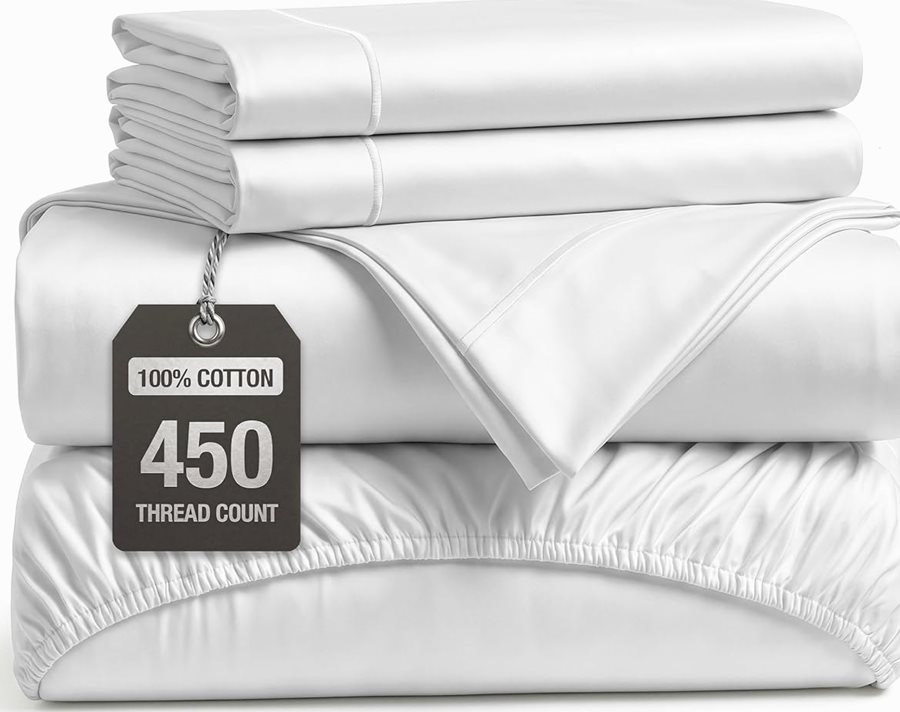
Queen 450-Thread-Count Sateen Sheet Set, Long-Staple Cotton, White
The set that rewards two minutes of pressing: heat brings the sateen lustre all the way up.
View details & specs →The long game: storage, sun and retirement
Three last habits that separate five-year bedding from ten-year bedding:
- Store breathable. Cotton in sealed plastic yellows and mildews; cotton on an airy shelf keeps. Fold sheets inside one of their own pillowcases and the set stays together, dust-free and ventilated: the oldest linen-closet trick and still the best one.
- Mind the sun. Line-drying is wonderful for cotton but UV slowly fades dyes: dry colours in shade or inside-out. Whites, meanwhile, love direct sun: it's a free, gentle brightening treatment.
- Retire downward, not outward. When a towel finally slows down after years of service, it becomes a gym towel, then a dog towel, then a rag. Cotton's whole lifecycle usefulness is the quiet sustainability argument nobody markets: the most eco-friendly textile is the one that stays out of the landfill for a decade.
That's the entire manual. None of it is difficult, it's mostly doing less than the bottle and the thermostat suggest, and the payoff compounds monthly. Pair it with fabric worth caring for from the collection, and check the short version anytime on our Use & Care page. Your sheets in year ten will thank you in the only language they have: by feeling better than they did in year one.
Marcus Lee
Customer Care · LANE LINENPart of the team behind LANE LINEN's storage furniture. Read more about how we work, or browse the full range.