How to Choose Sheets You’ll Keep for Ten Years
 Amara OkaforDesign·June 5, 2026·11 min read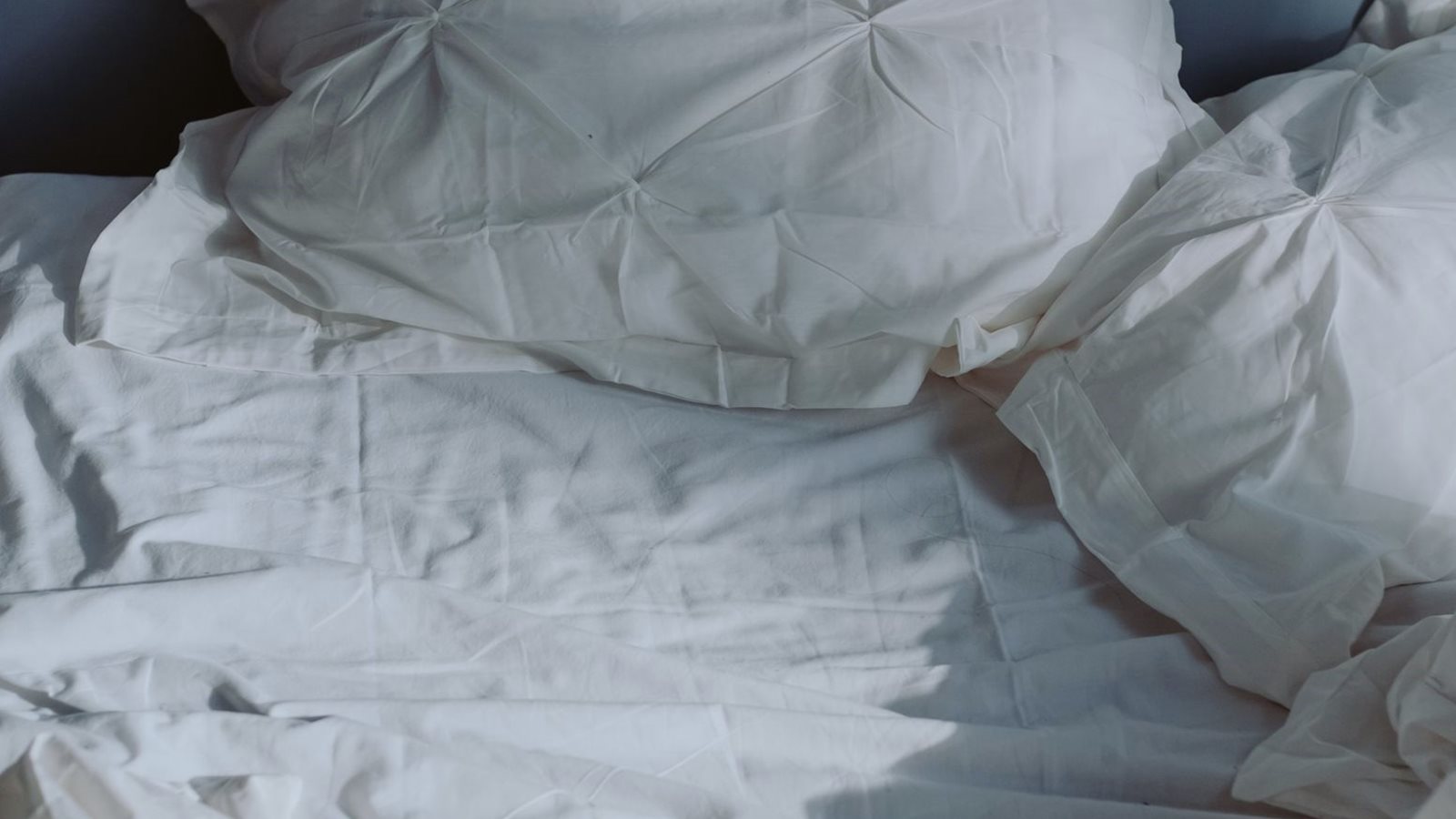
Most people buy sheets the way they buy batteries: grab whatever looks reasonable, hope for the best, replace them when they fail. Then they spend a third of their life lying on that decision. This is the conversation we wish we could have with every shopper before they click "add to cart": what actually determines how sheets feel, which numbers on the package matter, which are marketing, and how to match a weave to the way you personally sleep.
Start with how you sleep, not with the fabric
Here's the mistake almost everyone makes: they start from the product. Percale or sateen? Four hundred thread count or a thousand? Egyptian or organic? Those questions have answers, but they're the second step. The first step is an honest audit of your nights.
Do you run hot? Do you wake up with the duvet kicked to the floor in January? Or are you the person wearing socks to bed in July, who wants bedding to feel like a warm hand on the shoulder? Do you love the crisp snap of a freshly made hotel bed, or do you want fabric that pours over you like something liquid? None of these answers is wrong, but each one points to a different sheet, and no single "best sheet set" exists that serves all of them.
- Hot sleepers need airflow above everything: a breathable weave beats any softness claim, because nothing feels soft at 2 a.m. when you're overheating.
- Cold sleepers want a denser, smoother weave that holds a thin layer of warmth against the skin, and they layer well under a cotton blanket.
- Sensitive skin cares about fibre quality and finishing chemistry more than weave. This is where certifications stop being fine print and start being the whole point.
- Restless sleepers should obsess over the fitted sheet: pocket depth and elastic quality decide whether the corner pops off during the nightly wrestling match.
A sheet can only do one job brilliantly. The trick is knowing which job you’re hiring it for.Amara Okafor, LANE LINEN Design
Percale vs. sateen: the only fork in the road that really matters
Strip away the poetry from bedding marketing and nearly every cotton sheet on the market is one of two weaves. Understand these two and you understand eighty percent of sheet shopping.
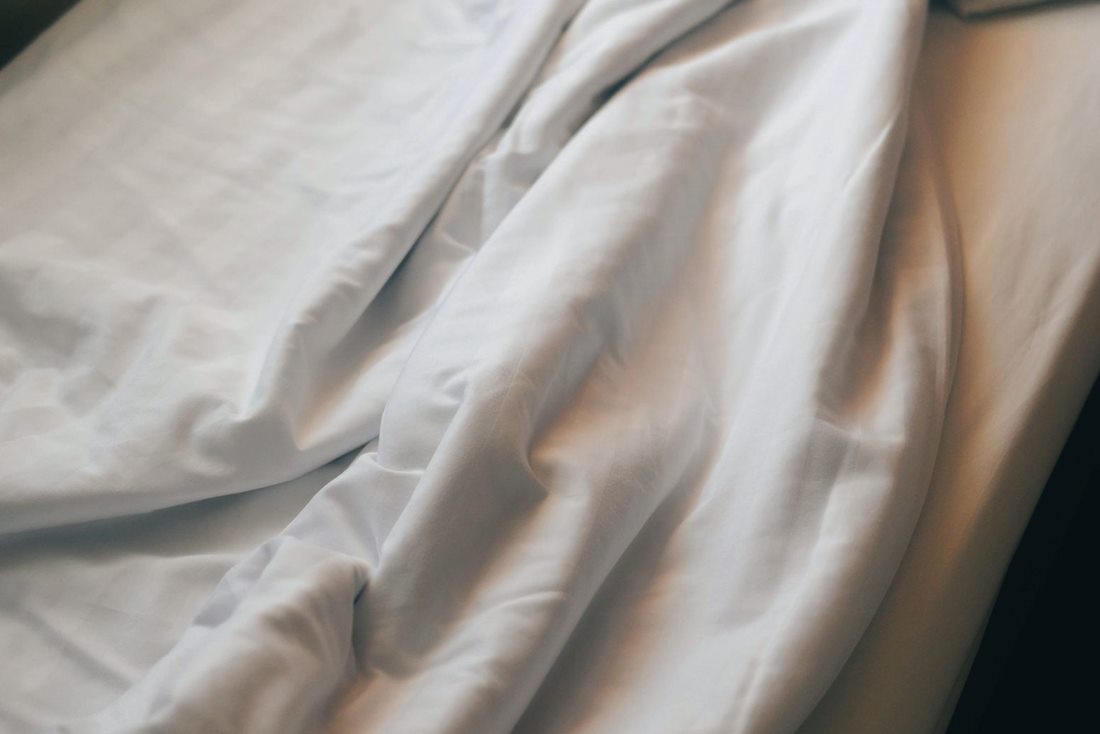
Percale is the classic one-over-one-under weave: the same structure as a crisp dress shirt. It produces a matte, cool, breathable fabric with a distinct "snap" when you shake it out. Percale is the reason hotel beds feel the way they do. It sleeps noticeably cooler because the open weave lets air move, and it gets softer with every wash while keeping its crispness. The trade-off: it wrinkles more, and it will never feel silky, because it isn't trying to.
Sateen floats three or four threads over one, putting more yarn surface on the face of the fabric. The result is a subtle sheen, a heavier drape, and that smooth, almost buttery hand people describe as "luxurious." Sateen resists wrinkles better and feels warmer against the skin, which is a feature in a cold bedroom and a bug in a hot one.
| Percale | Sateen | |
|---|---|---|
| Feel | Crisp, cool, matte, the hotel bed | Silky, smooth, subtle sheen, the spa bed |
| Sleeps | Cooler; open weave breathes | Warmer; dense face holds heat |
| Wrinkles | More (relaxed look, or iron it) | Less; drapes smooth on the bed |
| Durability | Excellent; softens without thinning | Excellent; long floats need quality yarn |
| Best for | Hot sleepers, summer, crisp-bed lovers | Cold sleepers, winter, smooth-feel lovers |
If you read that table and thought "I want the cool one," start with our organic percale sheet set: it's the crispest thing we make. If you thought "I want the smooth one," the 450-thread-count sateen set is that exact fabric. Still torn? The Fabric & Fit Finder on our homepage narrows it down in three questions.
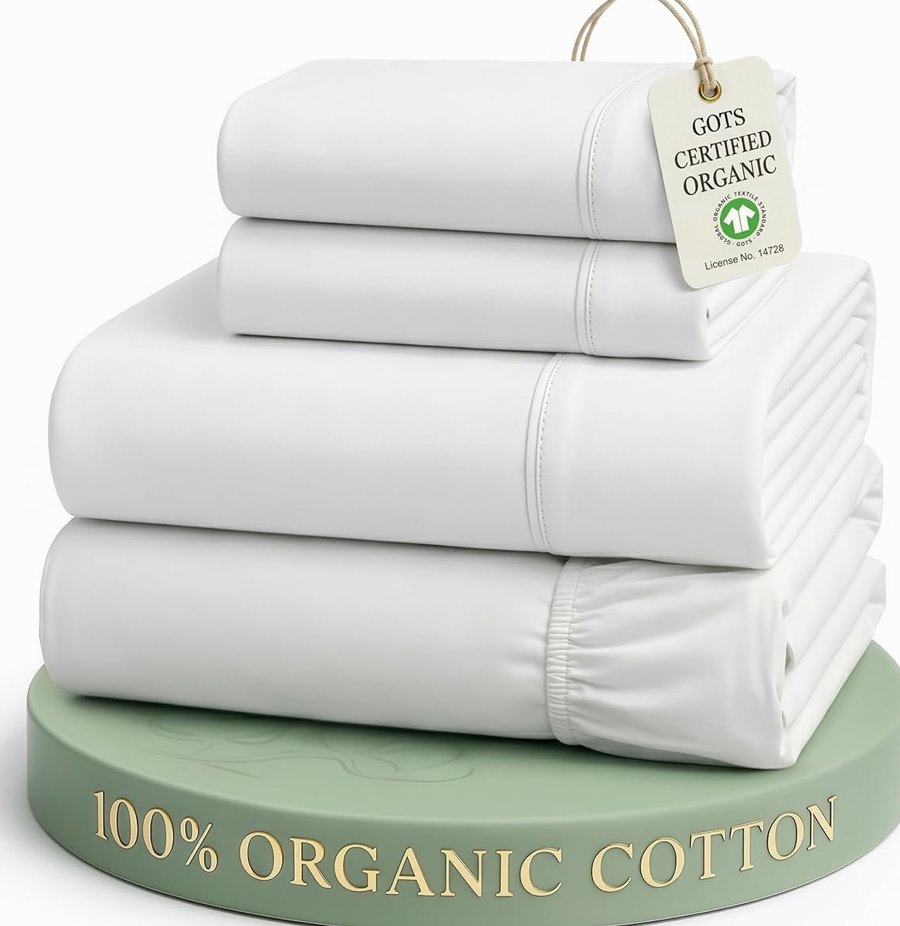
Queen Organic Cotton Percale Sheet Set, 4-Piece, Cooling White
The crisp, cool option: GOTS-certified organic percale that hot sleepers keep reordering.
View details & specs →Thread count: the number that hijacked an industry
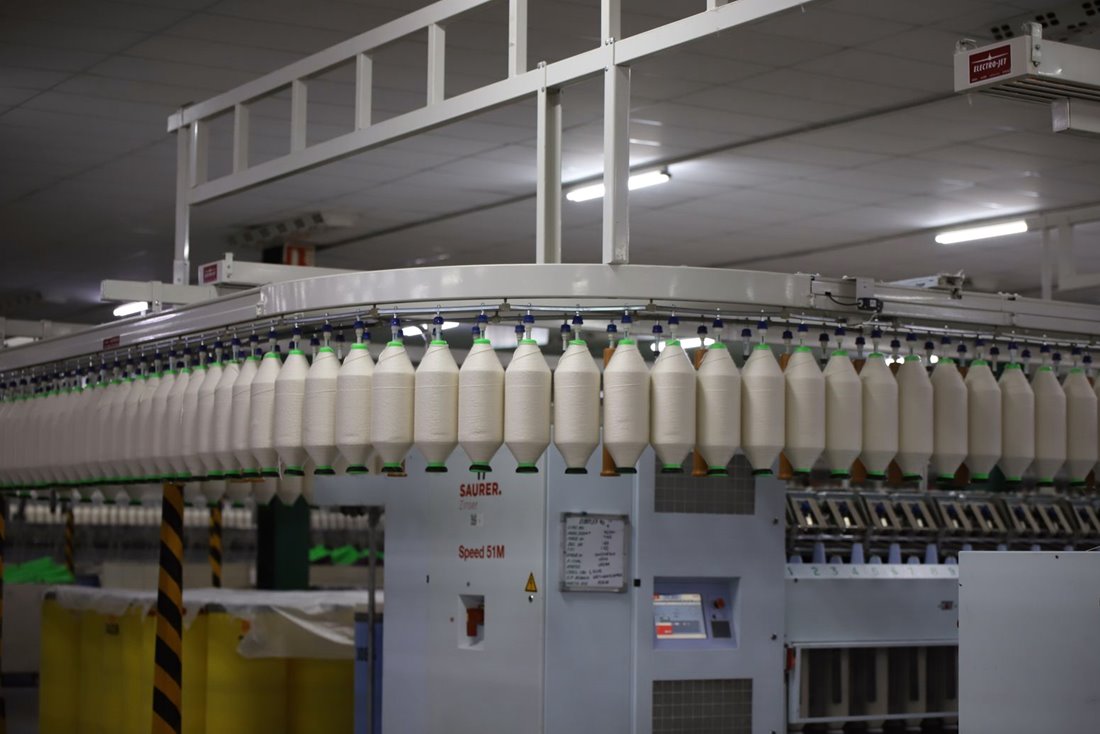
Thread count measures threads per square inch of fabric. Sensible metric, until marketing got hold of it. Somewhere along the way "higher is better" became gospel, and manufacturers found a workaround worthy of a heist film: twist multiple thin, weak plies together, count each ply separately, and print "1000 thread count" on a package of fabric that would embarrass a decent 300.
Here's what two decades of textile engineering actually supports:
- 200–400 is the honest sweet spot for percale. The weave physically can't pack many more quality threads per inch without losing the airflow that makes percale worth buying.
- 300–600 makes sense for sateen, where the float structure genuinely benefits from more, finer yarns.
- Above that, fibre quality matters far more than count. A 450-count sateen in long-staple cotton will outperform an 1800-count mystery blend on every measure, feel, breathability, durability, every single time.
The fibre: where softness actually comes from
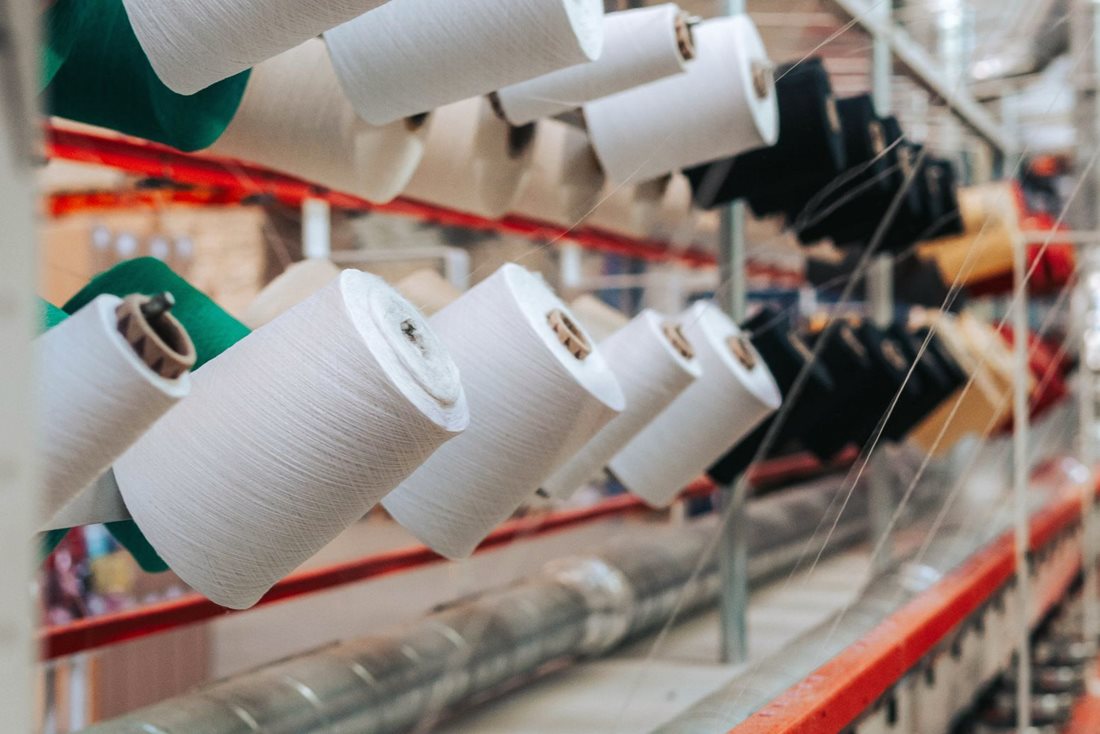
Cotton quality comes down mostly to staple length: the length of the individual fibres spun into yarn. Short fibres mean more fibre ends poking out of the yarn: that's roughness you can feel and pilling you'll see by month three. Long fibres spin into smooth, strong, fine yarn that gets softer with washing instead of shabbier. This is 90% of the difference between sheets that last two years and sheets that last ten. We wrote a full deep-dive on this in Cotton, Decoded, but the short version:
- Long-staple cotton is the meaningful baseline for good sheets. Everything we weave starts here.
- Egyptian cotton, the real, extra-long-staple kind: is the smoothest and strongest of all. Hence our queen and king Egyptian sets feel the way they do.
- GOTS-certified organic cotton adds a verified environmental and chemical standard on top: the certification tracks the fibre from field through finishing, so "organic" means something you can audit rather than something the box says.
The fitted sheet: where cheap sets go to die
Ask people why they threw out their last sheet set and almost nobody says "the flat sheet wore out." It's always the fitted sheet: elastic gone slack, corner seams blown, or the miserable discovery that a "queen" fitted sheet was cut for some theoretical eight-inch mattress no one has owned since 1995.
Modern mattresses are deep: twelve to fourteen inches is standard now, and with a topper you're pushing sixteen. A fitted sheet needs three things to cope:
- A true deep pocket. Measure your mattress from the top edge to the bottom (add the topper!). Our fitted sheets run 15–16" pockets: check the specs table on each product page for the exact figure.
- All-round elastic. Elastic only at the corners is a cost-cut you'll pay for nightly. Fully elasticized edges grip the whole way around.
- Reinforced corner seams. The corner takes all the stress every time you change the bed. It should be sewn like it knows that.
And because fitted sheets die first, it should be possible to replace one without re-buying a set. It is why we sell the organic fitted sheet on its own, with two pillowcases thrown in.
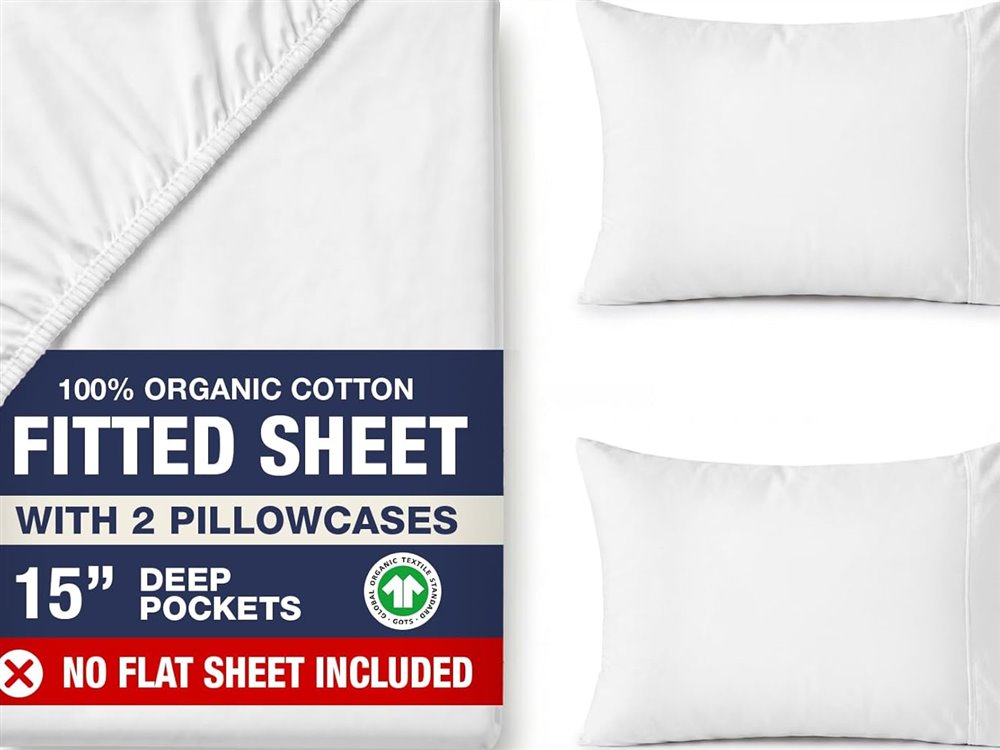
Queen Organic Cotton Fitted Sheet + 2 Pillowcases, 15" Deep Pocket
The most-replaced piece of bedding, sold sensibly: sold alone, 15" pocket, all-round elastic.
View details & specs →Sizing, pillowcases and the rest of the bed
Two quick, unglamorous checks that prevent most bedding disappointment:
Flat sheet coverage. A queen flat sheet should be around 90 inches wide or better if you share the bed with a blanket thief. Check the flat dimensions in the product specs, not just the size label: brands vary by six inches or more within the same nominal size.
Pillowcase fit. A case should be about two inches longer than the pillow and snug in width; a flapping empty sleeve looks sloppy and a stuffed case flattens the loft you paid for. Standard cases fit standard and most queen pillows; if you've upgraded to plush hotel-style pillows, check their gusset height too. Extra cases are cheap insurance. We sell 450-thread-count sateen pairs precisely because cases take the most face-oil, drool and laundry abuse of anything on the bed and deserve a rotation.
What to spend (and where the money goes)
Sheets follow a curve. At the bottom, $25–40 buys short-staple cotton or polyester blends that feel acceptable out of the package, pill by month three, and get replaced yearly: the most expensive cheap purchase in the house. At the top, designer bedding brands charge $250–500 a set, and an honest chunk of that is brand, packaging and Instagram advertising. The engineering sweet spot: long-staple or certified organic cotton, proper weaving, real deep pockets, lives between roughly $50 and $120 a set. That's not coincidentally where we price ours; the math of good cotton simply lands there when you skip the brand tax. Our full reasoning, with receipts, is in the honest comparison piece.
| Price band | What you’re getting | What it costs you later |
|---|---|---|
| $25–40 | Short-staple or poly-blend, shallow pockets | Replaced every 12–18 months; pills and thins |
| $50–120 | Long-staple / organic cotton, real construction | The honest sweet spot, 5–10 year sheets |
| $250+ | Same fibre grades plus branding & marketing | Mostly the logo; the cotton stopped improving at ~$120 |
Six sheet myths, quickly retired
Before the checklist, a rapid-fire cleanup of the folklore that follows bedding around the internet: each of these costs shoppers real money or real comfort:
- "Higher thread count is always better." Covered above, but it bears one more repetition because the myth funds an entire industry segment: past ~600, count tells you about the marketing budget, not the fabric.
- "Wrinkly sheets are low quality." The opposite is usually true. Pure cotton percale wrinkles because nothing artificial is stopping it; the wrinkle-proof set achieves that trick with resin finishes or polyester content. A relaxed, lived-in percale bed is the look every linen-brand photoshoot chases on purpose.
- "Softness in the store predicts softness at home." The squeeze test measures the finishing chemistry, which lasts three washes. The only honest test is wash ten. That is the reason fibre grade, not shelf feel, is the thing to buy on.
- "You should feel warm the moment you get in." Cotton warms as it reflects your body heat back. A few seconds of initial coolness is the sign of a breathable fabric doing its job, and it's precisely what you want in August.
- "All queens are the same size." Nominal sizes hide six-inch differences in flat-sheet dimensions and pocket depths between brands. The spec table outranks the size label, always.
- "Sheets are all basically the same, so buy the cheapest." You will spend roughly 25,000 hours of the next decade touching this purchase. Cost-per-hour, the difference between a $27 set and a $36 set is invisible; the difference in those hours is not.
The five-minute checklist
Everything above, compressed to what you check before buying, from us or anyone else:
- Pick your weave by your sleep: hot and crisp-loving → percale; cool and smooth-loving → sateen or Egyptian sateen.
- Ignore thread counts above ~600; read the fibre line instead: long-staple, Egyptian, or GOTS organic.
- Measure your mattress depth with the topper on, then check the fitted-pocket spec.
- Look for all-round elastic and reinforced corners. The fitted sheet is the set's weakest link.
- Check the certifications: OEKO-TEX means no harsh finishing chemistry against your skin; GOTS means the organic claim is audited, not asserted.
Run that checklist and you genuinely cannot buy bad sheets, anywhere. Run it across our sheet collection and we think you'll see why people keep them for a decade. And once they're on the bed, keep them wonderful with our care guide: good cotton rewards five minutes of laundry knowledge with years of extra life.
Amara Okafor
Design · LANE LINENPart of the team behind LANE LINEN's storage furniture. Read more about how we work, or browse the full range.