Inside a Modern Cotton Mill: How Bedding Is Made in 2026
 Priya AnandQuality & Testing·July 8, 2026·12 min read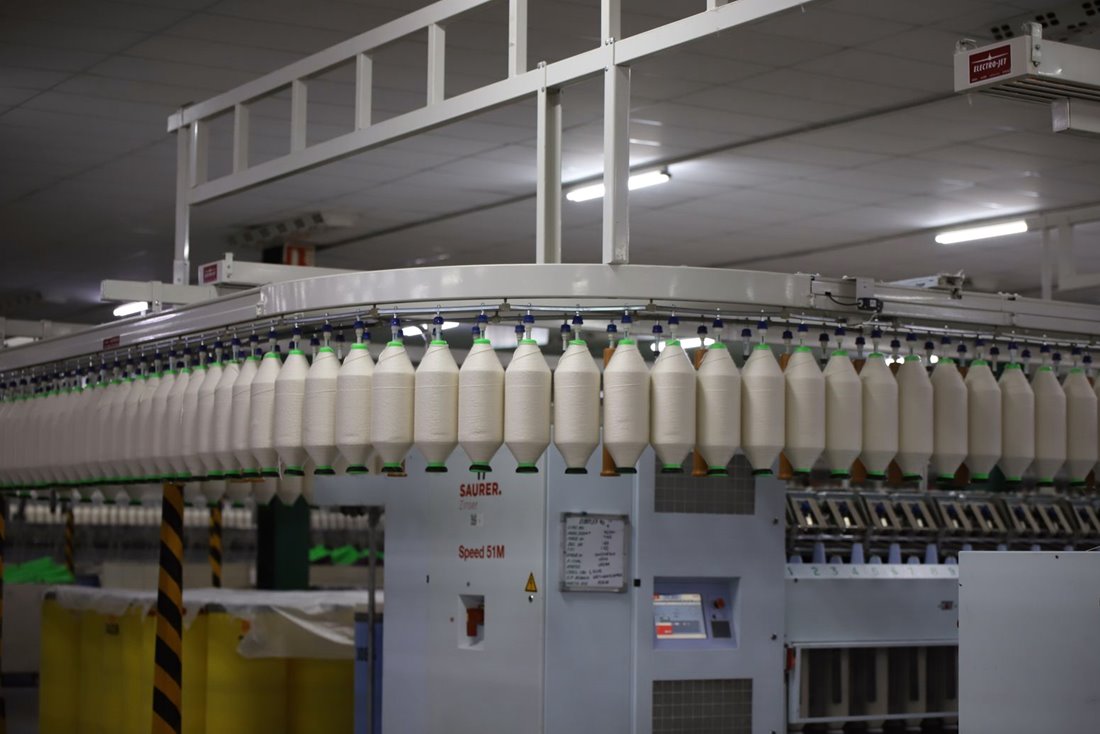
Most people picture textile production as either a Dickensian loom shed or a fully robotic black box. A modern certified cotton mill is neither. It's a surprisingly precise piece of process engineering where a boll of raw fibre becomes a finished sheet through a dozen distinct transformations, each one measurable, each one auditable, and each one a place where quality is either built in or lost forever. Here's the full journey your bedding takes before it reaches your bed, and what "modern" actually changed at every step.
Step one: the field decides half the outcome
A mill can't add quality that the field didn't grow. Staple length, the property that decides nearly everything about the final fabric, as we detailed in Cotton, Decoded, is set by seed variety, climate and harvest timing before any machine touches a fibre.
What's changed in a generation: organic cultivation went from a niche experiment to an industrialized, certified system. GOTS-certified farms, the ones behind our organic percale line, manage pests with crop rotation and beneficial insects instead of broad-spectrum spraying, and their harvests enter a documented chain of custody: every bale is tagged, so the fibre in a finished sheet can be traced backwards to certified fields. That paper trail is the difference between "organic" as a claim and organic as a fact.
At intake, the mill lab samples every bale: staple length, strength, micronaire (fineness), colour grade, trash content. Modern instruments measure a bale in seconds: work that took a skilled classer an afternoon within living memory. Bales that miss spec are rejected before they can dilute a batch.
You can’t inspect quality into a sheet at the end. You select it, bale by bale, at the start.Daniel Hart, LANE LINEN Sourcing
From fibre cloud to yarn: cleaning, combing, spinning
Accepted bales are blended, mixing dozens of bales evens out natural variation, then opened into a cloud of loose fibre and cleaned of seed fragments and dust in a cascade of rollers and airflows. Then comes the step that separates decent fabric from great fabric: combing.
Carding machines first align the fibres into a soft rope called sliver. Combing then does something commercially painful and mechanically simple: it drags fine metal combs through the sliver and throws away the short fibres: up to a fifth of the material. What survives is only the long, parallel, strong fibre. Every yarn in our sheets is combed; when you see "combed cotton" on a label, that discarded fifth is what you're paying for, and it's why combed fabric doesn't pill.
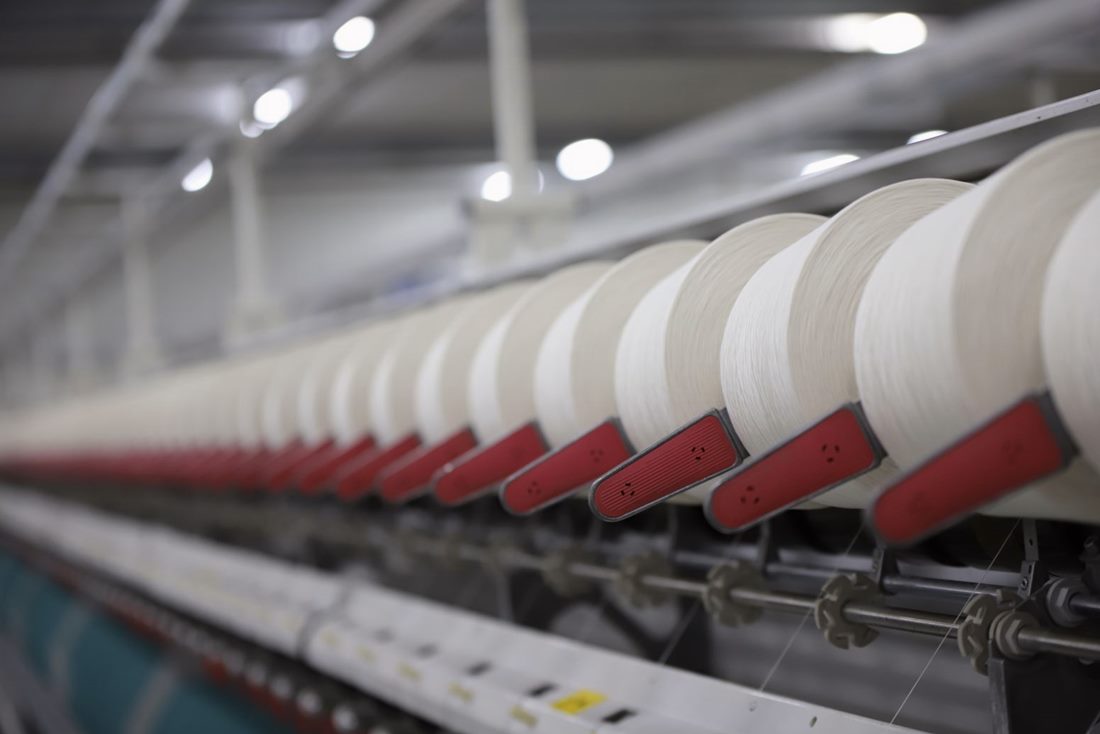
Spinning twists the combed sliver into yarn, and here the modern mill splits into technologies with real consequences for the finished product:
- Ring spinning. Slower, finer, stronger; the smooth yarn in our hand towels and sheets.
- Zero-twist spinning: long-staple fibre wrapped with a dissolvable binder instead of hard twist; after finishing, the binder washes out and leaves lofty, open yarn that drinks water. That's the entire secret of our zero-twist bath sets.
- Compact spinning: a modern ring-spinning refinement that vacuums stray fibre ends into the yarn body before twisting: fewer protruding ends, less hairiness, more lustre.
The loom floor: where 21st-century speed meets 300-year-old logic
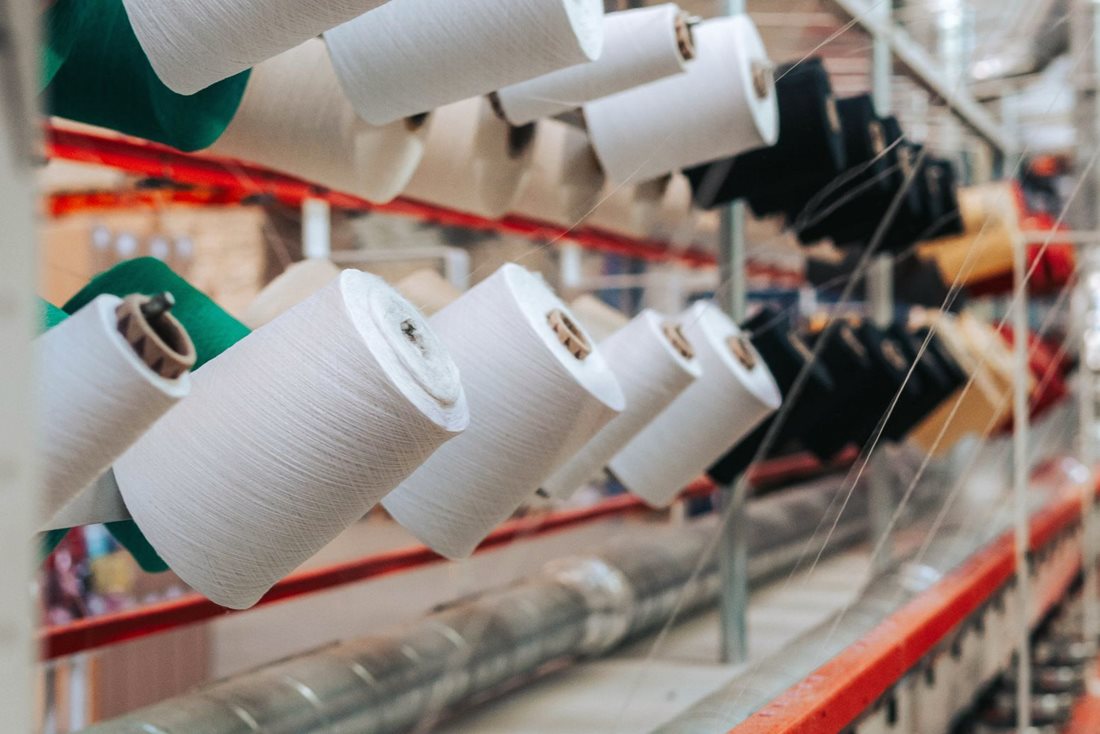
The logic of weaving hasn't changed since the hand loom: interlace warp and weft in a pattern. Everything else has. A modern air-jet loom carries the weft thread across the warp on a pulse of compressed air at several hundred insertions per minute: the thread crosses the fabric faster than your eye tracks it. Rapier looms, the other workhorse, trade some speed for gentler handling of delicate yarns like sateen floats.
What matters for your bed is what rides along with that speed:
- Electronic dobby heads switch weave patterns in software: the same loom produces our crisp percale, our sateen, and the herringbone twill of the queen blanket by loading a different program.
- On-loom sensors stop the machine within milliseconds of a broken thread. A flaw that a Victorian weaver would have woven metres past is now caught at the exact pick where it happened.
- Camera inspection scans the fabric as it winds off, flagging defects by coordinate so they're cut around: not shipped.
Towelling runs on specialized terry looms that weave two warps at once: a ground warp for structure and a pile warp that's deliberately fed slack so it stands up in loops. The loop density and height set the towel's GSM and personality: tall dense loops for a plush bath sheet, low flat weave for a sand-shedding Turkish beach towel.
Finishing: the honest version and the shortcut version
Raw woven fabric, "greige", is stiff, greyish and nothing you'd sleep on. Finishing turns it into bedding, and it's the stage with the widest gap between doing it right and doing it cheap.
The honest sequence: scouring (washing out natural waxes), optional mercerization. A caustic bath under tension that permanently swells the fibres rounder, stronger and more lustrous, the treatment behind our mercerized Egyptian sateen: then dyeing or optical whitening, then mechanical softening: the fabric is run over rollers and beaten supple, or tumbled in air. Physics, not coatings.
The shortcut version replaces that last step with silicone softener baths that make any fabric feel expensive for exactly three washes. It's the oldest trick in the aisle, and it's why our buying guide tells you to judge sheets by wash ten, not by the squeeze test in the store.
The water story: dyeing without the old sins
Textiles earned their environmental reputation honestly, dyeing and finishing were historically among the world's thirstiest and dirtiest industrial processes, and in unregulated corners of the industry they still are. This is the area where a modern certified mill differs most radically from both the Victorian shed and the cut-rate operation, and it's worth seeing the specifics rather than the slogans.
The old model pushed fabric through open dye baths and discharged the spent liquor, dye, salt, caustic, into whatever river was nearest. The certified modern model attacks every stage of that sentence. Low-liquor-ratio dyeing machines move dye through fabric with a fraction of the water, cutting both intake and effluent volume. Reactive dyes with high fixation rates bond most of the pigment to the fibre instead of sending it down the drain, which is also why certified fabric doesn't bleed in your wash at home. Effluent treatment plants. A hard GOTS requirement, audited annually, clean what remains before discharge, and the more advanced mills recirculate treated water back into the process. Heat gets the same treatment: dye baths run hot, and heat-exchanger systems capture that energy from outgoing water to pre-warm the incoming.
None of this is charity; it's the auditable cost of the certificates on the label. When our GOTS percale claims a clean process, the claim has a paper trail with annual inspections behind it: the same logic as the fibre's chain of custody, extended to the water.
How a mill earns (and keeps) its certificates
Since certifications carry so much weight in this story, it's fair to show the machinery behind them, because a certificate is not a sticker, it's a subscription to being inspected.
- Initial audit: the certifying body walks the entire facility: chemical inventory against the restricted-substances list, wastewater plant performance, record-keeping, worker interviews for the social criteria. Any input not on the approved list has to go before the certificate arrives.
- Chain-of-custody bookkeeping: certified fibre must be tracked and segregated at every step: separate storage, flagged batch records, mass-balance accounting so a mill can't buy one certified bale and label ten. The books have to reconcile: certified output can never exceed certified input.
- Annual renewal and unannounced visits: the audit repeats every year, with spot visits between. Batch lab tests, the OEKO-TEX side, sample finished fabric continuously against the harmful-substances list.
- Loss of certificate: the enforcement that gives the system teeth. A failed audit means suspension, and a suspended mill loses every brand that requires the label. For a certified mill, compliance isn't ethics theatre; it's the revenue base.
A certificate is not a promise. It’s a schedule of inspections with revenue attached.Priya Anand, LANE LINEN Quality
Cut and sew: the details you'll touch every night
Finished fabric is spread in long plies and cut: increasingly by computer-guided blade from a digital marker that nests pattern pieces to minimize waste. Then sewing, still the most human-intensive step, and the one whose shortcuts you personally feel at 3 a.m.:
- Fitted-sheet elastic: all-round elastic, sewn in under even tension, versus corner-only bands. The difference between a sheet that grips and a corner that pops: the entire argument for our standalone fitted sheet.
- Seam type: our Egyptian sets use French seams, raw edges enclosed inside a double-sewn seam, so nothing frays no matter how many hot washes they see.
- Hem stitching: double-needle hems on towels take the daily snap-and-hang abuse; single-stitched hems are where budget towels begin unravelling.
The lab: washing your sheets fifty times before you do
The last stop before packing is the physical-testing lab, and it's our favourite room in any mill because it's where marketing goes to die. Standardized tests put numbers on every promise:
| Test | What it simulates | What passes |
|---|---|---|
| 50-cycle wash test | A year of weekly laundering | Softness up, no pilling, colour held |
| Dimensional stability | Your dryer, repeatedly | Shrinkage within the % the label planned for |
| Martindale abrasion | Years of sleeper friction | No thread breaks at spec rub counts |
| Absorbency sink test | A towel meeting water | Full sink in seconds, faster after washing |
| Colour-fastness | Sun, sweat, detergent | No bleeding onto white test fabric |
Samples from every production run go through this gauntlet before the run ships. When a product page of ours says "gets softer with every wash," a lab technician has literally watched it happen fifty times with instruments. That's the quiet revolution of modern textile production: not robots replacing people, but measurement replacing hope, at every step from the bale scanner to the wash lab.
One last number worth carrying out of the lab: modern mills reject entire production runs on failures that would have shipped without comment twenty years ago: a shade a few percent off standard, shrinkage one point past spec. That sounds wasteful until you realize the rejected run gets re-dyed or re-finished rather than discarded, and the discipline is precisely why a $36 sheet set today outperforms the $150 set of two decades ago. Measurement got cheap; excuses got expensive.
The same discipline, seen from the other side, is what our About page describes in brief. And once the fabric survives all this and reaches your home, the only remaining variable is your washing machine. Hence we wrote the care guide next.
Priya Anand
Quality & Testing · LANE LINENPart of the team behind LANE LINEN's storage furniture. Read more about how we work, or browse the full range.