Cotton, Decoded: What the Words on the Label Actually Mean
 Daniel HartSourcing & Standards·June 16, 2026·11 min read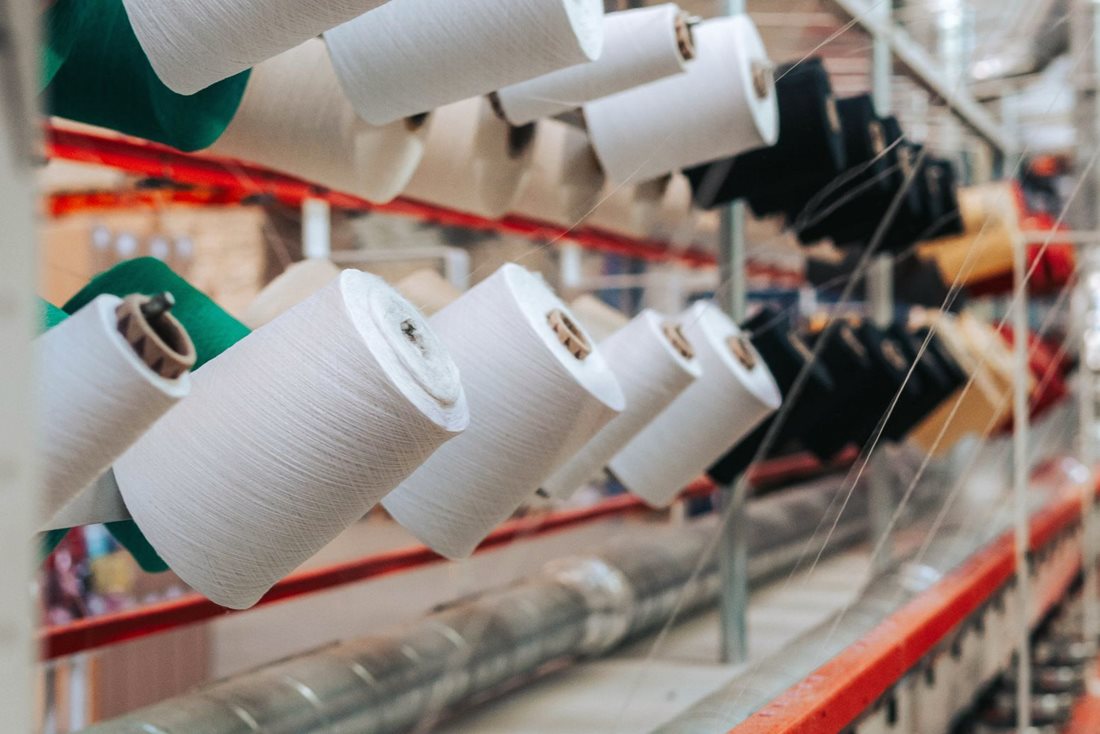
Walk down any bedding aisle and the packaging shouts a dozen different vocabulary words at you: Egyptian, Supima, long-staple, organic, mercerized, ring-spun, zero-twist, GSM, OEKO-TEX. Some of those words are regulated and precise. Some are legally meaningless. This is the decoder ring: every term that appears on our own products explained honestly, including where the marketing usually stretches the truth.
Staple length: the single most important thing nobody explains
Cotton doesn't grow as thread. It grows as individual fibres, fluffy hairs wrapped around the seed, and the length of those hairs, called staple, decides almost everything about the fabric they become.
Picture spinning yarn from fibres one inch long versus fibres two inches long. The short fibres need more twisting to hold together, and both ends of every fibre stick out of the finished yarn: millions of microscopic split ends. That's what roughness is. That's what pilling is: loose short fibres balling up under friction. The long fibres, by contrast, wrap smoothly into fine, strong, clean yarn with few exposed ends. The fabric they make starts smoother, stays stronger, and, this is the part people love, actually gets softer with washing, because laundering relaxes the yarn without shedding it.
| Grade | Staple length | What it means in practice |
|---|---|---|
| Short-staple (upland) | under 1 1/8" | Budget sheets & towels; rough edge feel, pills by month three |
| Long-staple | 1 1/8" – 1 3/8" | The meaningful quality baseline; smooth, durable, softens with age |
| Extra-long staple (Egyptian, Pima/Supima) | 1 3/8" + | The silkiest and strongest; premium sheets that last a decade |
Ask one question of any cotton product: how long is the fibre? Everything else, softness, strength, pilling, lifespan, follows from that answer.Daniel Hart, LANE LINEN Sourcing
This is why the fibre line on our product pages says what it says. The 450TC sateen set is long-staple cotton; the Egyptian cotton sets are the extra-long-staple grade; and when a product is short-staple appropriate, like a kitchen towel that will meet a greasy pan, we just use good ring-spun cotton and price it like the workhorse it is.
"Egyptian cotton": the most abused words in bedding
Genuine Egyptian cotton, Giza-grown, extra-long staple, is a genuinely superior fibre, and it's also one of the most faked labels in retail. Independent fibre-testing over the years has repeatedly found "Egyptian cotton" products containing little or none of it; the words on the box outsell the plant's actual harvest many times over.
How to protect yourself, with any brand:
- Price-sanity check. Real extra-long-staple fibre costs multiples of commodity cotton. A "$29 Egyptian cotton king set" is telling you what it is; listen.
- Look for "100% Egyptian cotton": not "Egyptian cotton blend," "Egyptian-quality," or our favourite weasel, "Egyptian comfort."
- Expect the feel to be different: heavier drape, dense smoothness, a low natural lustre. If it feels like the $29 set, it is the $29 set.
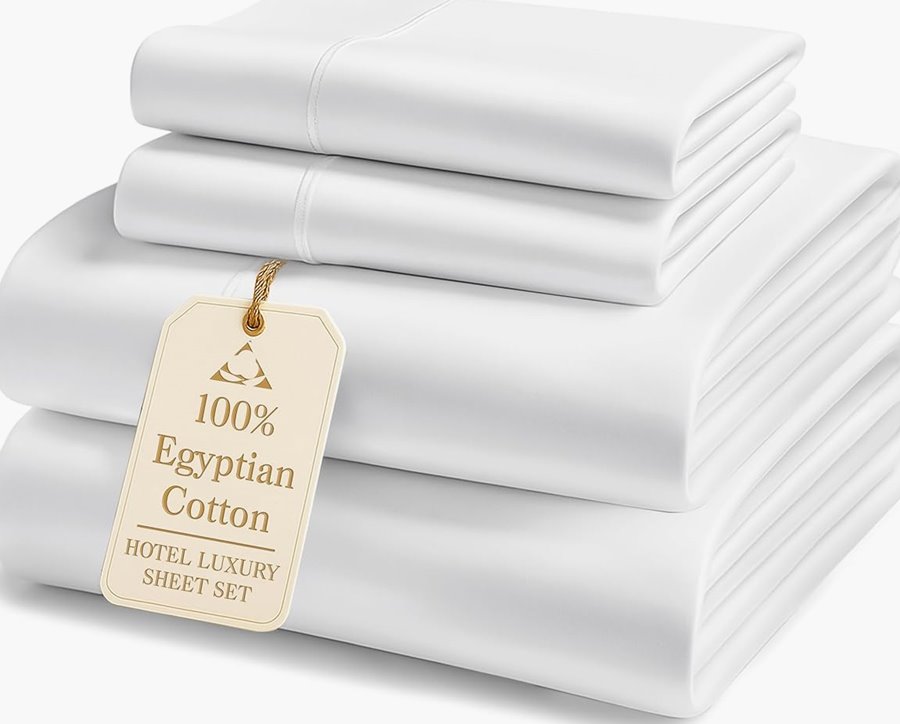
King 100% Egyptian Cotton Sheet Set, Sateen, 16" Deep Pocket
The real thing, in the flagship size: 100% Egyptian cotton sateen with a 16-inch deep pocket.
View details & specs →Organic and the certifications that actually audit
"Organic" on a textile can mean two very different things. It can mean the cotton plant was grown organically, or it can mean the entire product, from field through dyeing and finishing, met an audited standard. Only certifications tell you which.
GOTS (Global Organic Textile Standard) is the strict one. It requires certified-organic fibre, restricts every processing chemical down the chain, imposes wastewater treatment on the mills, and adds labour requirements: then audits all of it annually. When our percale sheets carry GOTS, that's a supply-chain paper trail, not a mood.
OEKO-TEX Standard 100 answers a different question: regardless of how the fibre was grown, is the finished fabric free of harmful substances? Every batch is lab-tested against a list of hundreds of chemicals: formaldehyde, heavy metals, problematic dyes. It's the certification that matters most for what touches your skin eight hours a night, and it's why you see it across our range, from blankets to washcloths.
Weaves: same cotton, different personalities
Take identical yarn and interlace it differently, and you get fabrics with completely different characters. The two big ones, crisp percale and silky sateen, get a full head-to-head in our sheet-buying guide, so here's the wider family portrait:
- Percale (one-over-one-under): crisp, matte, breathable. The cool hotel bed.
- Sateen (three-or-four-over-one): smooth, lustrous, warmer drape. The spa bed.
- Herringbone: a twill woven in zig-zag columns: dense, durable, snag-resistant, with a pattern you can see. It's why our queen blanket survives homes with cats.
- Terry: loops of yarn standing up from a woven base. The loop side grabs water, which is the whole science of a bath towel.
- Flat / Turkish weave: no loops, low pile: dries fast, packs small, releases sand. Hence Turkish beach towels behave nothing like bath towels at the shore.

Towel language: GSM, zero-twist, ring-spun, mercerized
Towels have their own dialect, and it's more honest than sheet marketing: the terms mostly describe real manufacturing choices.
GSM (grams per square metre) is towel density. 300–400 GSM is thin, quick-drying, gym-bag territory. 450–600 is the plush-but-practical band where daily bath towels belong. Above 700 is hotel-heavy: gloriously thick, slow to dry, prone to mustiness in humid bathrooms. Our 12-piece zero-twist set sits at 550 GSM on purpose: thick enough to feel like a hotel towel, light enough to dry by morning.
Ring-spun means the fibres were combed parallel and spun continuously into smoother, stronger yarn: the difference you feel between our hand towels and a bargain-bin multipack.
Zero-twist goes further: long-staple fibres are spun with almost no twist, leaving the yarn open and lofty. Water has more surface to grab, air moves through it freely, so the towel is simultaneously more absorbent, faster-drying and cloud-soft. It only works with long fibres (short ones would fall apart without twist). It is why zero-twist towels are never truly cheap.
Mercerized cotton has been treated under tension to swell and round the fibres, adding lustre, dye-depth and strength. It's the finishing touch on our flagship bath sets.
| Term | It’s telling you… | Watch out for |
|---|---|---|
| GSM 550 | Plush-yet-dryable density | "Hotel weight" with no number given |
| Ring-spun | Combed, smoother, stronger yarn | "Soft-spun" and other invented terms |
| Zero-twist | Lofty, absorbent, fast-drying | Zero-twist claims on short-staple cotton |
| Mercerized | Lustre + strength treatment | Nothing: it’s rarely faked; it’s just rarely done |
A five-minute label-reading exercise
Theory is easier to keep when you've applied it once, so let's read two real-world labels together, one honest, one performing.
Label A: "4-Piece Sheet Set. 100% GOTS-certified organic cotton. Percale weave, 300 thread count. Fitted sheet 60"×80", 15" pocket, fully elasticized. OEKO-TEX Standard 100. Machine wash warm, tumble low."
Notice what this label does: it commits. Fibre named and certified, weave named, an honest thread count in percale's natural range, exact dimensions including pocket depth, elastic construction specified, chemistry certified, care stated. Every claim on it is checkable, and several are auditable by third parties. This is, not coincidentally, roughly the label on our own percale set. We want customers who read labels this way.
Label B: "Luxury Hotel Collection. 1800 Series. Softer than Egyptian cotton! Double-brushed microfibre, deep pockets fit most mattresses, wrinkle-free & fade-resistant."
Now count the tells. "1800 Series". A number formatted to be mistaken for thread count while legally being a model name. "Softer than Egyptian cotton": a comparison that names the prestige fibre while confirming the product contains none of it. "Double-brushed microfibre": polyester, brushed to feel plush in the store squeeze test. "Fits most mattresses": no pocket measurement, which means shallow. "Wrinkle-free and fade-resistant": the honest properties of plastic. Nothing on this label is auditable, and nothing on it is an accident.
Weight, warmth and the seasonal wardrobe
One more practical layer of the materials story: the same cotton serves different seasons through weight and construction, and a well-planned linen closet works like a small wardrobe. Summer wants low-mass, high-airflow fabric: percale sheets alone, or with the three-layer cooling blanket for people who need cover to sleep. The shoulder seasons are where a 350-GSM herringbone blanket over percale earns its keep: warmth you can vent by sticking a foot out. Deep winter stacks the system: sateen or Egyptian sheets for their warmer hand, blanket, then duvet: three light, breathable layers that trap more warmth than one heavy one while letting you tune the temperature at 2 a.m. by peeling exactly one layer. The all-cotton stack has a bonus property polyester systems can't offer: every layer breathes, so the humidity your body releases overnight passes through instead of condensing against you: the clammy-wake-up that plagues synthetic bedding in any season.
What we deliberately don't use
A materials guide should also cover the road not taken. Three common bedding materials you won't find in our range, and the honest reasons:
- Polyester microfibre. Cheap, wrinkle-proof and impressively soft in the store: then it traps heat all night, holds body oils through the wash, and sheds microplastics with every laundry cycle. Cotton breathes, releases oils, and biodegrades. We're a linen company; we pick the plant.
- "Bamboo" (viscose). Marketed as eco-magic, but most bamboo fabric is viscose rayon. The bamboo is dissolved in industrial chemistry and reconstituted. The plant may be sustainable; the process usually isn't. Certified organic cotton gets us to the same environmental goal with an auditable trail.
- Deep chemical softeners. Some brands finish rough fabric with silicone softeners so it feels premium in the package, for the first three washes. We'd rather sell you fabric that starts honest and improves. The "gets softer every wash" line on our boxes is just what long-staple cotton does when nobody fakes it.
A word on what's inside the pillow
Fabric gets all the vocabulary, but the fill inside a pillow deserves one honest paragraph too. Traditional down is warm, light and expensive, and an allergen for a meaningful slice of sleepers. That is the reason the modern default has shifted to down-alternative: fine polyester microfibre clusters engineered to mimic down's loft without the sneezing or the price. The quality lever is the cluster structure and fill density: good down-alternative springs back when you fold the pillow in half; cheap fill takes the fold as a permanent suggestion. Our hotel pillows pair that fill with a two-inch gusseted cotton shell. The gusset is the vertical side panel that keeps loft even across the pillow instead of ballooning in the middle, and it's the detail to look for on any pillow, from any brand, if you sleep on your side. The shell fabric matters for the same reason pillowcases do: cotton breathes against your face for eight hours; polyester shells run measurably warmer.
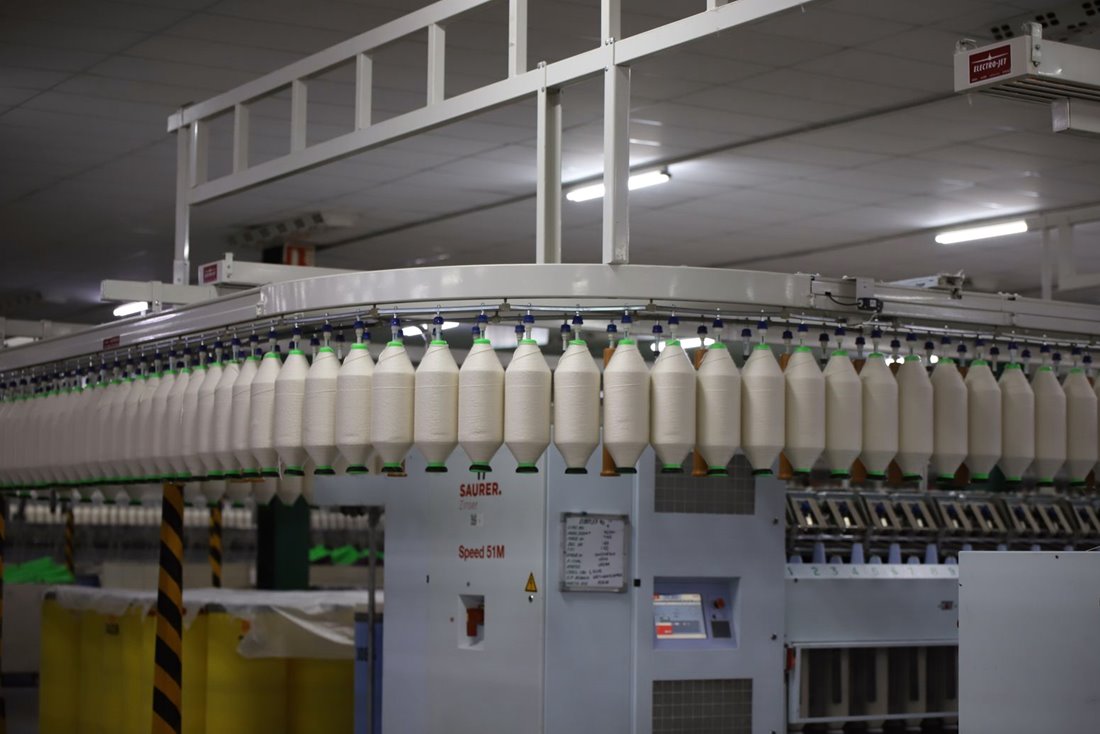
That's the vocabulary. Armed with it, read any bedding label, ours included, and you'll know exactly what you're holding. See the fibres themselves in our tour of a modern cotton mill, or put the knowledge to work across the full collection.
Daniel Hart
Sourcing & Standards · LANE LINENPart of the team behind LANE LINEN's storage furniture. Read more about how we work, or browse the full range.