LANE LINEN vs. Budget Packs and Premium Labels: An Honest Comparison
 Amara OkaforDesign·June 28, 2026·10 min read
Every bedding brand claims to be the sensible choice, which means none of those claims carry information. So let's do something slightly unusual for a brand's own journal: put LANE LINEN on the table next to the two kinds of competitors you're actually deciding between, the budget multipacks that dominate marketplace search results, and the premium direct-to-consumer labels with the beautiful ad campaigns, and compare honestly, including the places where they beat us.
The bedding market, mapped in one paragraph
Bedding today splits into three tiers. At the bottom: high-volume budget brands selling polyester microfibre and short-staple cotton sets from $20, optimized entirely for the "under $30" search filter. At the top: venture-funded premium labels selling long-staple cotton sets for $250–500, optimized for brand desirability: think linen-clad models gazing out of lofts. And between them a thinner middle: brands trying to deliver the top tier's materials at a price closer to the bottom tier's. That middle is where we live, on purpose. The question worth answering is what each tier actually trades away.
Round one: against the budget multipacks
Let's be fair to cheap bedding first: it's genuinely cheap, it ships fast, and modern microfibre is engineered to feel plausibly soft out of the bag. If you're furnishing a rental you'll leave in eight months, it's a rational buy. Here's what the $25 set trades away, measured over time rather than at the moment of purchase:
- Fibre. Polyester or short-staple cotton. The first traps heat and clings to body oils; the second pills and thins. Neither improves with age: they audition well and then decline nightly.
- Construction. Corner-only elastic, shallow pockets, single-stitched seams. The fitted sheet is the first casualty; our buying guide explains why that's the piece that decides a set's lifespan.
- Chemistry. At this price, OEKO-TEX testing is rare. You generally don't know what finishing chemistry is in fabric that spends eight hours against your skin.
- The replacement treadmill. The real cost. A $27 set replaced every 14 months costs more over six years than one good set, and that's before valuing the landfill trips.
| Six-year cost of a queen bed | Budget set ($27, replaced ~every 14 mo.) | LANE LINEN percale ($35.99, kept) |
|---|---|---|
| Sets bought | 5 | 1 |
| Total spent | ~$135 | $35.99 |
| Feel in year six | Brand new again (5th replacement) | Softer than the day it arrived |
| Certified chemistry | Usually unknown | GOTS + OEKO-TEX |
Cheap sheets aren’t cheap. They’re a subscription.Priya Anand, LANE LINEN Quality
Where the budget tier honestly wins: upfront price, and nothing else we can find. If $36 is simply not in the budget this month, buy the affordable set without shame, and when it pills, we'll be here.
Round two: against the premium DTC labels
This is the more interesting fight, because the premium brands sell genuinely good products. Long-staple cotton, proper percale and sateen, real quality control. The materials are frequently excellent. If you own a set, you know. So what exactly does the extra $150–350 buy?
Mostly three things: advertising (those beautiful campaigns are funded by the sheets), packaging and brand experience (lovely boxes, monogrammed tissue), and margin structures built for venture-scale growth. What it usually does not buy is better fibre: long-staple cotton is long-staple cotton, and above roughly the $120 mark, extra dollars stop reaching the fabric.
Compare spec sheets, not vibes, and the picture gets specific:
| Spec, queen sheet set | Typical premium DTC | LANE LINEN |
|---|---|---|
| Percale, certified organic | $180–280 | $35.99, GOTS |
| Sateen, long-staple, ~450TC | $180–250 | $47.49 |
| 100% Egyptian cotton sateen | $300–500 | $99.99 |
| Deep pocket standard | 13–15" | 15–16" |
| Free shipping & returns | Usually | Always |
Where the premium tier honestly wins: colour ranges (some offer thirty shades; our palette is deliberately tighter), brand pleasure (unboxing a status brand is a real feeling, and we won't pretend otherwise), and occasionally specialty weaves: heavyweight European flax linen, for instance, which we don't currently make. If those things matter to you, that's a legitimate reason to pay up. But if the question is "how does the fabric feel at 2 a.m. in February, and in year five?": the spec sheet says you're paying triple for the tissue paper.
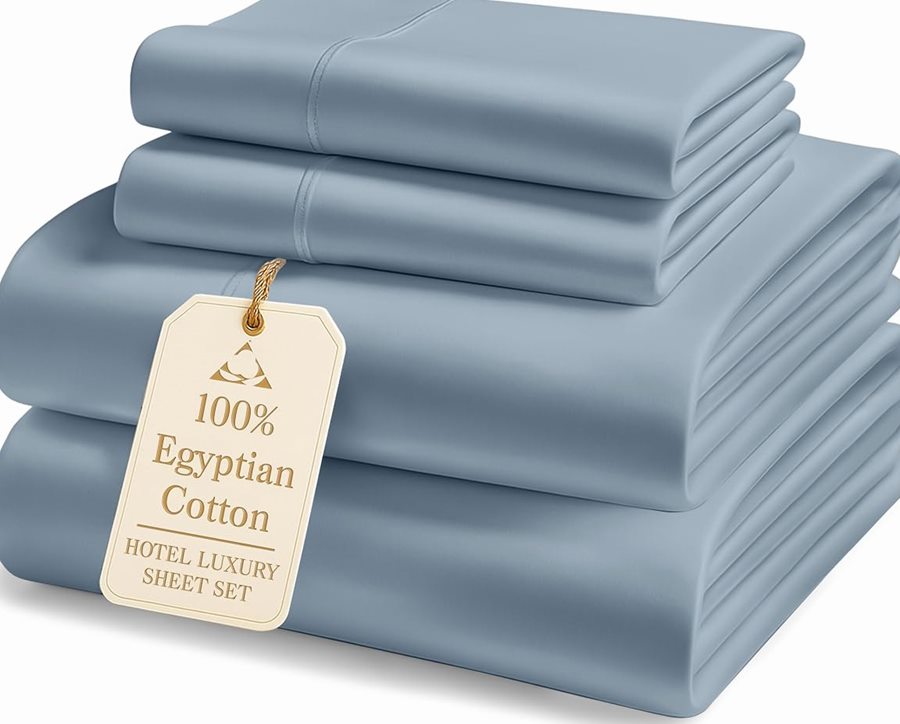
Queen 100% Egyptian Cotton Sheet Set, Mercerized Sateen
The set to cross-shop against $400 flagships: genuine extra-long-staple Egyptian cotton, mercerized, French-seamed.
View details & specs →The same comparison, in towels
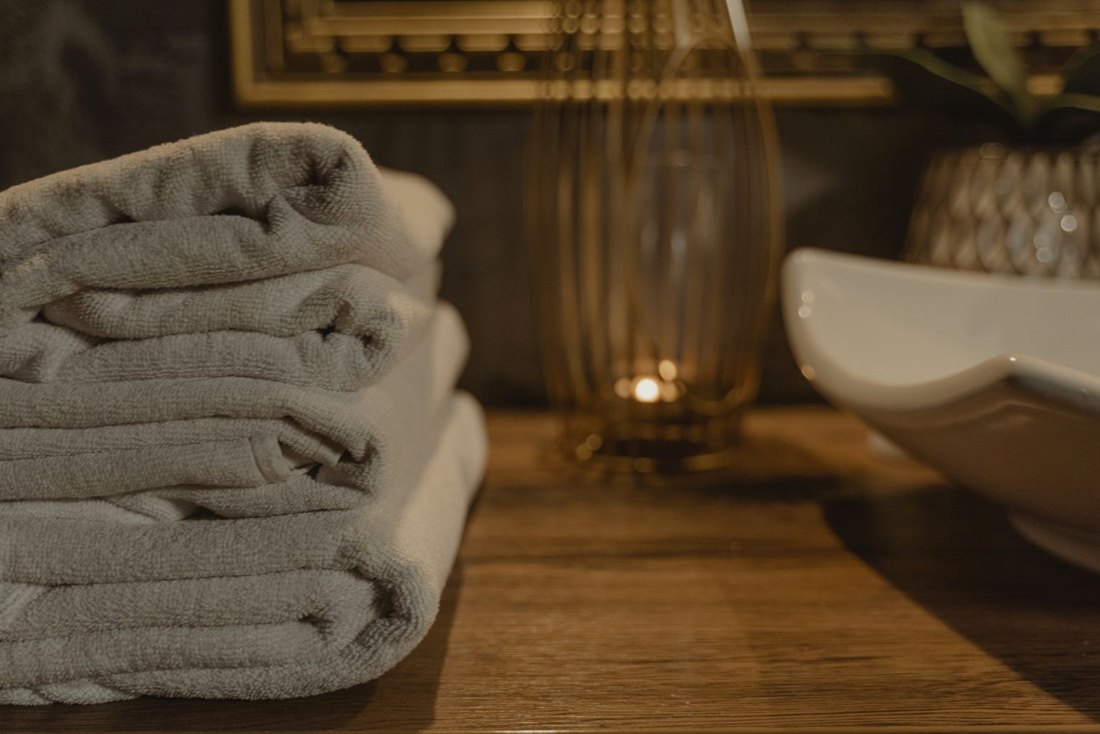
Towels tell the identical story with different numbers. Budget towel packs use short-staple cotton at low GSM: thin, scratchy at the hem, absorbency that fades as the loops crush flat. Premium bath brands sell beautiful 700-GSM Turkish towels at $40–90 per towel: magnificent, slow to dry, and priced like small furniture.
The engineering middle: long-staple, ring-spun or zero-twist cotton at 500–600 GSM, sold in sets that outfit a whole bathroom. Our 12-piece zero-twist set works out to about $4.17 a piece; the 24-piece set runs a family bathroom for under $70 total. The premium single-towel brands genuinely win on monogramming and colour depth; on absorbency-per-dollar and dry-time it isn't close.
How the middle tier is possible (it's not a trick)
"Same cotton, third of the price" reasonably triggers scepticism, so here is the actual mechanism, item by item:
- No advertising machine. The premium labels spend enormous shares of revenue on customer acquisition. Our marketing budget is roughly this journal and word of mouth. That difference alone is most of the gap.
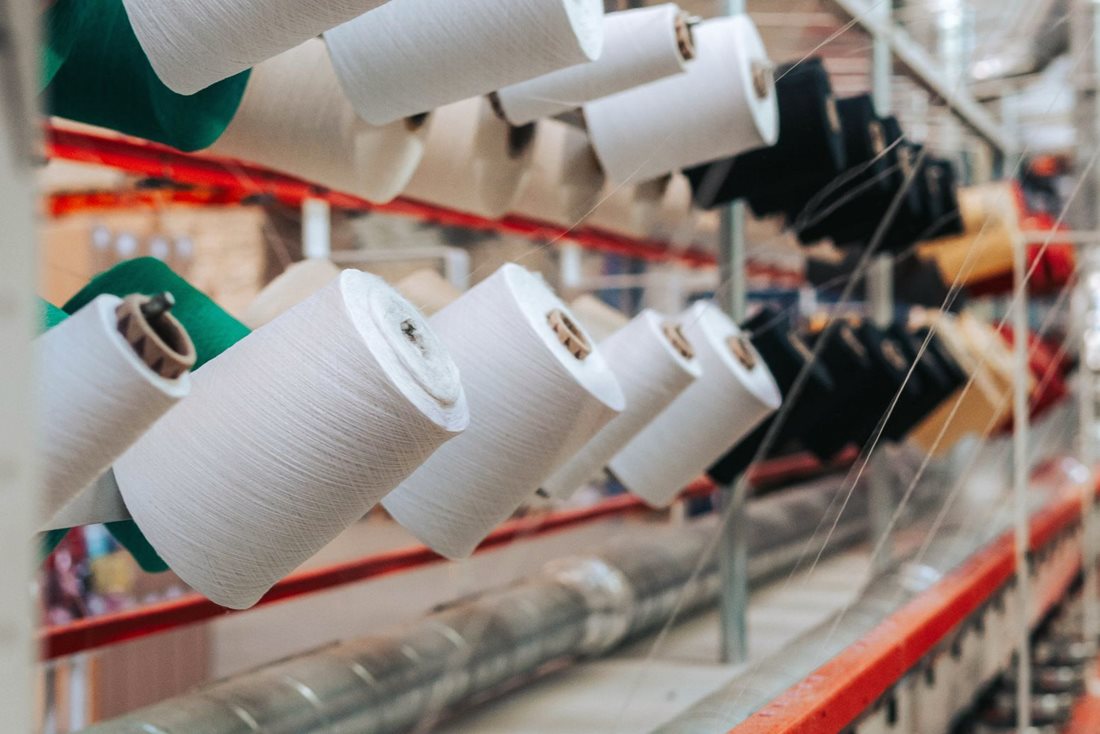
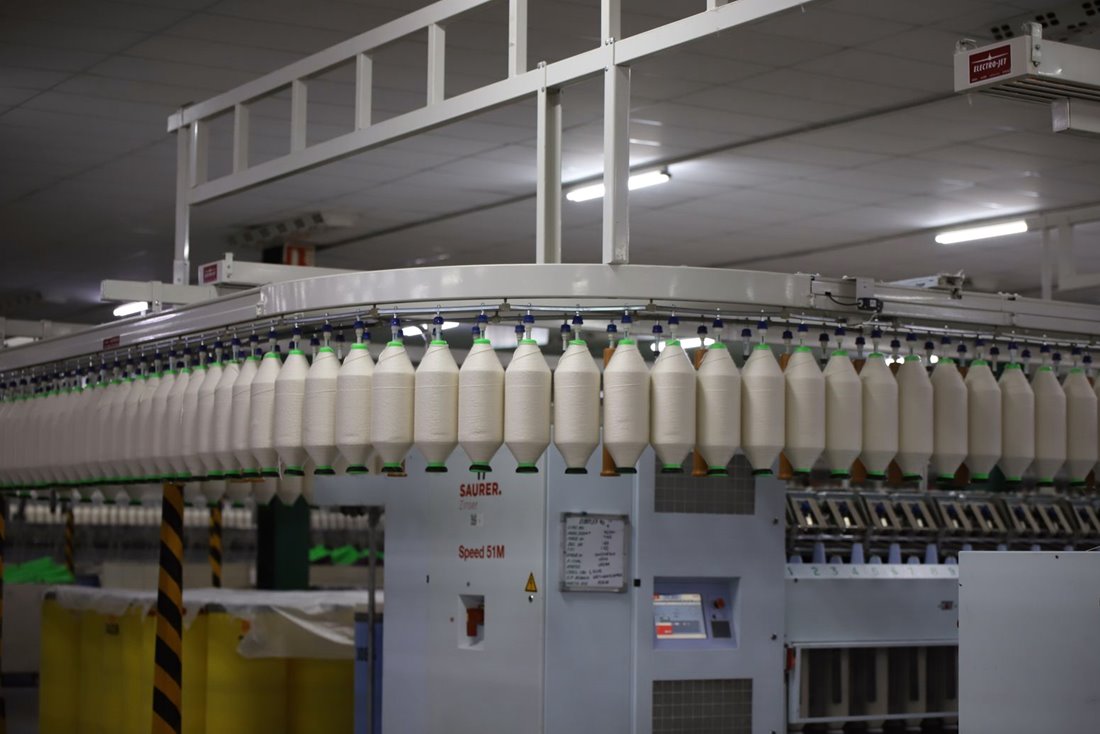
- Direct mill relationships. We work with the same certified mills year-round: no seasonal collections, no agents stacking margin. (The full tour: how modern bedding is actually made.)
- A deliberately small range. Every colour and size a brand carries multiplies inventory cost. We make fewer, better-chosen products: the whole catalogue fits on one page, and that's a feature.
- Packaging that protects, not performs. Reusable and recyclable, nothing monogrammed. The fabric is the luxury.
A note on review counts, since you'll check them anyway
Smart shoppers cross-check any brand claim against marketplace reviews, so here's how to read them without being played, because review sections have their own economics.
Volume tells you age and ad spend, not quality. A listing with 80,000 reviews has been selling longer and advertising harder than one with 4,000: that's the entire information content of the number. Budget listings accumulate colossal counts precisely because the product is replaced every year: a subscription generates more reviews than a purchase.
Read the one-star reviews of expensive products and the five-star reviews of cheap ones. The failure modes of a premium set (colour slightly off, shipping delay) versus a budget set (pilled in two months, elastic died, "smelled chemical out of the bag") tell you what each tier's actual risk is. Meanwhile a cheap set's five-star reviews are almost all written in week one, before short-staple cotton has had time to reveal itself. Sort by "most recent" and watch the ratings of a budget listing sag as cohorts age.
Look for the wash-ten review. The single most valuable sentence in any bedding review section is some version of "six months in, still great" or "softer than when they arrived." Reviews written after real laundering are the only ones measuring the thing you're actually buying. On our own reviews page we lean on exactly those: buyers reporting from month three onward, when the fabric has told the truth.
A review written on day two measures the packaging. A review written on wash ten measures the product.Amara Okafor, LANE LINEN Design
The two-week test: how to compare any two sets at home
Spec tables persuade, but bedding is ultimately an empirical product, so here's the honest home experiment we suggest to anyone cross-shopping us against anything, in either direction. Free shipping and returns exist precisely so you can run it.
- Wash both sets twice before judging. This burns off the finishing chemistry on whichever set is coasting on it and lets both fabrics show their real hand. Any set that got dramatically worse after two washes has already answered your question.
- Sleep a full week on each, same season, same blanket stack. One night measures novelty; a week measures the 2 a.m. temperature reality. The thing no showroom squeeze can simulate.
- Score exactly three things: did you sleep hot; did the fitted corner stay on; how did the fabric feel on the last morning versus the first. Everything else, packaging, brand feelings, the unboxing tissue, will not be in the room with you in year three.
- Then look at the receipts side by side. If the $250 set won the week, that's a legitimate result and you should keep it: sleep is worth money. Our experience, and the reason we're confident enough to publish the protocol: on those three scores, the spec-equivalent sets tie, and the receipt breaks the tie.
The verdict, by sleeper
| You are… | Buy… | Because… |
|---|---|---|
| Furnishing a short-term rental | Budget tier | Lifespan doesn’t matter; price does |
| A hot sleeper who loves crisp | LANE LINEN organic percale | Certified cooling percale at a third of DTC price |
| A smooth-and-silky sleeper | 450TC sateen or Egyptian | Premium-grade fibre, honest price |
| Chasing a specific designer shade | Premium DTC | Thirty-colour palettes are their real advantage |
| Outfitting bathrooms for a family | 24-piece towel set | Absorbency-per-dollar the single-towel brands can’t match |
Three questions we get every week
"If your cotton is the same grade, why doesn't it feel identical to the $300 set out of the box?" Because out-of-the-box feel is mostly finishing, and premium brands finish for the unboxing moment. Wash both twice and the fabrics converge: that's the entire point of the two-week test above, and it's the comparison we're happy to live on.
"Why are you on Amazon instead of only selling direct?" Distribution honesty: that's where the customers already are, and marketplace logistics beat what a lean brand could build alone. The catalogue here shows everything in one calm place; checkout happens where your saved address and two-day shipping live. It's also why our prices can hold still while ad-funded brands reprice around their campaigns.
"What's the actual catch?" Palette and patience. We make one considered version of each product instead of thirty shades, and we restock steadily rather than dropping seasonal collections. If you need a very specific terracotta or bedding as a fashion statement, the premium tier serves that need genuinely better, and we'd rather say so here than have you find out after unboxing.
That's the market, as honestly as we know how to draw it. Whatever tier you land in, our buying guide and materials decoder apply to every brand equally: take the checklists with you wherever you shop, and sleep well on whatever you choose, that part, at least, every tier can agree on.
Amara Okafor
Design · LANE LINENPart of the team behind LANE LINEN's storage furniture. Read more about how we work, or browse the full range.